
How to Choose Bearing Clearance C2, C3, C4: Selection Guide
Technical Snapshot
80k rpm
Maximum rated speed
≤32 dB
Noise class (Z1V1)
Z4V4
Precision class
More clearance is not a performance upgrade; it is a different set of compromises. C3 has become the reflex pick for buyers who want to feel protected, yet mismatched clearance accounts for the bulk of early high-speed failures across industrial plants.
Getting internal clearance right means balancing three variables against one another: the temperature the unit will really see, the character of the load, and the fit tolerance at shaft and housing. C2 belongs in precision high-speed spindles, C3 covers ordinary industrial duty, and C4 answers shock plus extreme heat. What decides the outcome is the effective clearance left after thermal growth, press-fit squeeze and load-induced deformation, not the size of the number printed on the box.
I began in this trade on a Suzhou assembly line, packing grease into housings and reading micrometers long before I ever handled a purchase order. Years later a buyer insisted his C3 deep-groove units were defective: spindle running hot, vibration climbing off the chart. I asked for the installation record, and there it was. The paperwork said C3, but the spindle in question wanted the tighter C2 band. The surplus internal play was destroying stiffness at high rpm. We swapped the lot and the complaint vanished. C3 feels like the cautious answer, but a spindle does not care how a specification feels. The same mismatch turns up far more often than buyers expect, and it absorbs a large share of the breakdowns that everyone blames on bearing quality instead of on clearance choice.
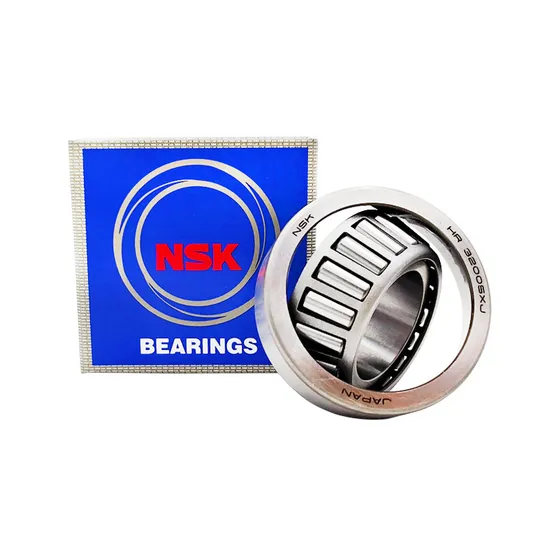
Selecting a grade properly means knowing what each class does once the machine is running, not just reading a suffix off a catalog page.
- What Internal Clearance Means, and Where C2, C3 and C4 Part Company
- How Do You Calculate the Clearance an Application Actually Needs?
- C2 vs C3 vs C4: Which Grade Suits Which Industrial Duty?
- Where Do Clearance Mistakes Cost the Most?
- How Do You Source a Clearance Grade You Can Verify?
- Conclusion
What Internal Clearance Means, and Where C2, C3 and C4 Part Company
An unmounted bearing always carries some axial or radial movement between the rolling set and the raceways, and it shrinks the moment the bearing is pressed onto a shaft and brought up to temperature. ISO 5753 governs the parameter: it sets how much thermal expansion a bearing can absorb, how load spreads across the rolling set, and how much of the starting play an interference fit will consume during assembly.
| Clearance Grade | Radial Play Range (60mm bore deep groove ball bearing) | Typical Operating Context |
|---|---|---|
| C2 | 5-15 microns | High-speed precision, tight temperature control |
| C3 | 15-25 microns | General industrial, moderate speed and temperature |
| C4 | 25-40 microns | Heavy shock loads, extreme thermal differentials |
Those numbers hold for one bore size only. Clearance bands scale with bearing dimensions, so check the maker's catalog for your exact designation. What travels across sizes is the relationship: C3 runs about twice as loose as C2, while C4 opens the band further still.
Here is where judgment usually slips. Because C4 carries the widest play, maintenance teams often treat it as the heavy-duty safe harbor. Frequently the reverse holds. Loose clearance at speed means fewer rolling elements share the load at any instant, so contact stress concentrates, vibration grows, and the raceways fatigue early.
The opposite error is more common than most plants realize. Too little clearance pushes a bearing into preload-like running even at moderate speed: the elements stay pinched against both raceways, friction heat builds, grease breaks down, and the unit cooks. Overheating cases that reach our desk usually trace back to this rather than to surplus play.
Making sense of any of it means tracking how a catalog figure becomes an operating figure, which is a calculation problem, and that is where the next section goes.
How Do You Calculate the Clearance an Application Actually Needs?
Clearance is not a lookup exercise. It is arithmetic: begin with the catalog value, subtract what thermal growth, press fits and load deformation will take away, then examine what is left at operating temperature.
The thermal term follows one simple relationship:
ΔC = α × ΔT × D
In that expression α stands for the coefficient of linear expansion in bearing steel (11.7×10⁻⁶/°C). The differential ΔT is measured between inner and outer ring, and D gives bore diameter. For steel components in ordinary industrial duty this works out to roughly 8 to 12 microns of clearance lost for every 100°C of shaft-to-housing difference.
Work it through in four moves:
- Set the baseline — fix the bearing type, bore size and catalog clearance group (C2, C3 or C4) you intend to order.
- Subtract thermal loss — measure or estimate the ring-to-ring temperature difference, then apply the expansion relationship to size the loss.
- Subtract fit squeeze — an interference fit on shaft or housing eats further play. An H7/k6 shaft fit, for instance, usually calls for moving up one grade (C2 to C3) to offset the inner-ring growth the press fit creates.
- Confirm what remains — the residual figure must still sit inside the window your speed, load and precision targets allow.
Load classification narrows the answer further. Light duty, under 10% of the basic static rating C0, tolerates a tighter grade. Moderate duty between 10% and 40% of C0 generally lands on C3. Heavy duty above 40% of C0 looks like C4 territory, but a steady heavy radial load and an impact load behave nothing alike, and confusing the two is one of the most frequent selection errors in the field.
A European wind OEM put the point on the record. Their multi-megawatt gearbox prototype kept losing tapered roller bearings, and engineering had picked standard C3 from static load sums alone. Running temperatures told a different story: effective clearance collapsed far enough to approach zero or even go negative, and skidding damaged the cages. We worked up a modified C3 for the 32220 size with material certification and DNV compliance documents attached. Gearbox noise dropped measurably and bearing life in field testing ran well beyond the prototype baseline.
That case is the argument in miniature: clearance choice cannot be separated from the operating envelope. Temperature, speed, load character and fit all pull on the same number.
C2 vs C3 vs C4: Which Grade Suits Which Industrial Duty?
Each grade answers a different operating problem, and pairing grade to duty is where selection either prevents failures or creates them. The three classes buyers specify most often serve genuinely different conditions, and substituting one for another because it happens to be in the warehouse is an expensive habit.
| Clearance Grade | Speed Suitability | Load Profile | Thermal Environment | Representative Applications |
|---|---|---|---|---|
| C2 | High (>3000rpm) | Light to moderate, steady | Controlled, moderate temperature rise | CNC spindles, precision grinders, high-speed motors |
| C3 | Moderate (1000-3000rpm) | Light to heavy, steady | Moderate temperature differential | Electric motors, conveyors, pumps, general industrial |
| C4 | Low (rarely above 1500rpm) | Heavy shock, impact | Extreme temperature differential | Mining crushers, steel mill rolls, large gearboxes |
The speed column matters most and gets ignored most. C2 exists for duties where rpm generates real centrifugal force and thermal growth; the tighter starting play offsets both and holds the load zone stable. C3 spans the broad industrial middle, where moderate expansion and ordinary fits produce predictable losses. Above moderate speed, C4 is almost never right, because the excess play lets elements skew and cage pockets carry loads they were never designed for.
An automotive parts supplier made the C2 case for us. Their CNC spindle chattered and vibrated because the bearings carried more play than precision work at speed allows. Moving to 7010 C2 angular contact units with controlled preload cut failures sharply and stretched mean time between failures by a large multiple, which turned constant swap-outs into a maintenance schedule they could plan around.
In heavy industry the C4 argument appears under impact. A copper mine kept losing crusher bearings because steady-load units could not absorb blows above 8000N without brinelling the raceways. We supplied NU3260 cylindrical roller bearings in C4 with the large bore the application required. The wider play covered both the shock and the working temperature; unplanned stops fell and service life stretched from a few months out to a substantially longer interval.
A steel mill conveyor then produced the opposite lesson. Maintenance had been fitting C4 spherical rollers on the assumption that extra play would handle heavy load and heat. At 120°C the thermal growth consumed that allowance entirely, leaving effectively zero: metal on metal, rapid overheating, failures every month. The correction was 22320 C3 with a controlled preload adjustment, and the breakdowns stopped within a few months.
None of which recommends the biggest number available. It recommends the number that fits the mix of speed, load character and thermal conditions the duty imposes.
Where Do Clearance Mistakes Cost the Most?
The expensive errors are rarely the obvious ones. They are assumptions that feel prudent while contradicting the physics. Three patterns account for most clearance-related failures that reach field support.
The first is defaulting to C3 everywhere. It has turned into the default line item in a lot of procurement systems, on the grounds that it covers most general industry. Put C3 into a high-speed precision spindle and the surplus play wrecks running accuracy and stiffness: vibration, poor surface finish, and failures from skidding that get logged as quality defects when the real fault is specification error.
The second is reaching for C4 whenever loads run heavy. The logic sounds tidy, since more deformation should need more room. But a steady heavy radial load is not an impact load. C4 under steady heavy duty at moderate speed opens the door to element skew, to cages taking punishment, and to collapse of the lubricant film, so the unit fails from internal instability rather than from being overpowered. C4 is built for impacts above 5000N and steep thermal differentials; steady heavy radial duty is a different problem entirely.
The third is diagnosing every hot bearing as overdosed on play. Counterintuitive as it sounds, most of the overheating cases we investigate come from insufficient clearance. Squeezed tight, a bearing runs in permanent preload: friction heat climbs quickly and the grease gives up. The crew sees heat and reaches for more coolant or a thicker grease, when the actual fault is that expansion and interference ate the clearance before the machine had even warmed to normal running.
The bill for these errors is not small. Unplanned stops caused by bearing failures run to serious annual cost per production line, and most of that spending is avoidable when clearance gets calculated instead of assumed. Plants that route clearance questions through technical review consistently report less bearing-related downtime than operations working from generic specifications.
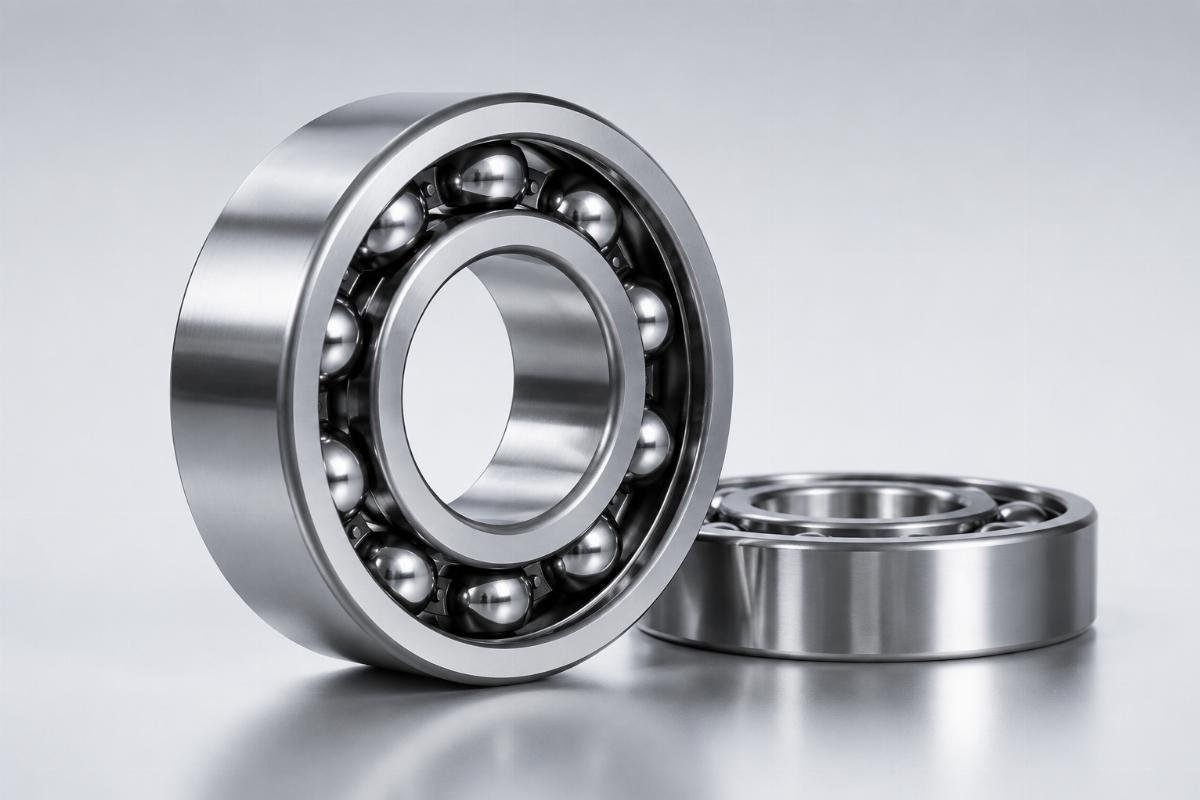
Avoiding the mistakes takes more than knowing the grades; it takes confirming that what arrives actually carries the clearance you ordered.
How Do You Source a Clearance Grade You Can Verify?
Choosing the grade is half the job. The other half is receiving units that match the specification, with paperwork you can check. Where clearance designations get mixed or mislabeled inside distribution channels, batch-level verification shifts from paperwork to quality control.
Bearing units we supply travel with a batch identity that ties the physical part to its production record: clearance group, precision class and plant of origin. That record is a working tool rather than a certificate for the file, because procurement and engineering can use it to confirm that what landed in the crate is what the drawing called for, down to the clearance band.
Common grades in common sizes ship from stock quickly. The real test comes with rare designations: large bores, special precision classes, odd clearance pairings, or ceramic and stainless versions. Factory lead times on those run in months, while outage windows and project milestones do not wait, so holding depth in rare items is what turns a multi-week quote into a same-week dispatch.
Batch inspection before dispatch adds the last layer. Every lot is dimensionally checked so that measured internal clearance lands inside the ISO 5753 window for its grade. That catches production drift and handling damage capable of nudging play outside tolerance, which matters most for C2 and modified specifications where the acceptable band is narrow.
For OEM programs needing a custom clearance, such as the modified C3 we built for the wind gearbox above, engineering collaboration, lot-level records and measurement discipline together keep every delivery on the engineered specification run after run.
Three things settle the sourcing decision in the end: whether the specification is technically right, whether the delivered part can be verified, and whether supply holds up when the grade is unusual. A partner who covers all three turns clearance from a recurring failure source into a controlled routine.
Conclusion
Clearance is an engineering calculation, never a catalog default. C2, C3 and C4 each answer a specific mix of speed, load and heat, and the wrong pairing drives most preventable bearing failures in industrial plants. Work out effective clearance after expansion and fit squeeze, verify the grade through batch records, and buy from a source that can hand over uncommon grades with measurement data attached.
Product Inquiry
Need an NSK-series equivalent for a specific application?
Send the designation or the duty details, and our team replies within one business day with pricing, lead time and the inspection certificates that travel with the shipment.
About the Author
Engineering desk
Bearing application engineers · compatible replacement bearings for brand-series interchange
Our editorial team covers global sourcing, supplier verification and industrial component knowledge. Material is assembled from published manufacturer specifications, industry standards and direct work with international B2B buyers, and every article is reviewed before publication.
Need a quote for a specific bearing designation? Our engineers reply within one business day.
Request a quote