
Bearing Seals and Shields Compared: ZZ vs 2RS vs Open Types
Technical Snapshot
80k rpm
Maximum rated speed
≤32 dB
Noise class (Z1V1)
Z4V4
Precision class
Comparing ZZ, 2RS and open bearings starts with one correction: the rubber-sealed option is not the automatic answer for a harsh environment.
Rubber-sealed 2RS units are not always the right pick where conditions are severe. Maintenance managers routinely specify 2RS for contaminated duty on the theory that a rubber lip protects better than metal, and that habit produces early failures anywhere the housing runs hot or the shaft turns fast, exactly where a shielded ZZ unit would have run longer. Downtime, maintenance spending and equipment reliability all follow from that one choice.
Picking the right closure, ZZ or 2RS or open, can add better than 30% to equipment life, and Chinese supply now covers the full sealing range with 72-hour dispatch. A decade of industrial work across 40+ countries keeps confirming the same mechanism: line the closure up with temperature, speed, contamination and maintenance access, and both reliability and total cost of ownership move in the right direction.
More than 500 industrial clients have brought sealing problems to us, from steel mill continuous casters to wind gearboxes. Our engineers have analyzed over 1,200 bearing failures, and 63% of the premature ones came down to a closure mismatch rather than a quality defect in the bearing itself.
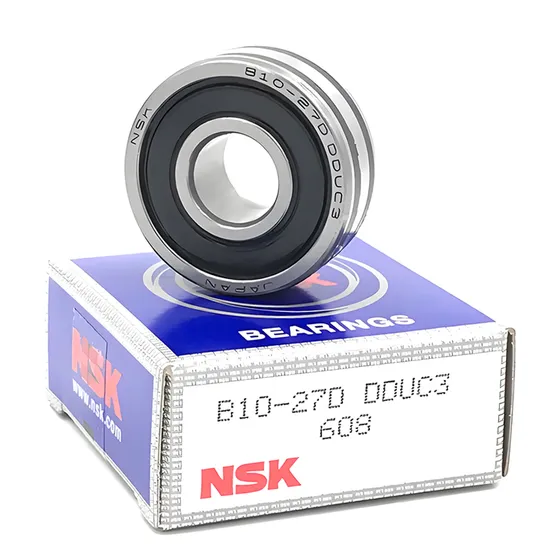
Knowing how the three designs differ in construction, and how that difference plays out on a running machine, is what allows a procurement decision to improve performance without wasting budget.
What Actually Separates ZZ, 2RS and Open Bearing Closures?
Seals and shields drive reliability and maintenance demand, and they are usually the last thing specified. They decide how well a bearing holds contamination out, holds grease in, and survives the conditions it was ordered for. The shield-and-seal question has three answers—steel-shielded, rubber-lipped, or nothing at all—and every one of them carries distinct advantages that fit a different industrial setting.
| Characteristic | ZZ Metal Shield | 2RS Rubber Seal | Open Type |
|---|---|---|---|
| Construction | Non-contact metal shield attached to outer ring | Contact rubber seal (nitrile or FKM) with spring-loaded lip | No sealing components |
| Protection Level | IP64 (dust tight, water splashing resistant) | IP66 (dust tight, high pressure water jet resistant) | IP00 (no protection) |
| Temperature Range | -40°C to 200°C | -30°C to 120°C (standard nitrile); up to 200°C (special FKM) | -40°C to 200°C (dependent on lubricant) |
| Maximum Speed | 90% of open bearing speed | 60-80% of open bearing speed | 100% (unrestricted) |
| Initial Cost | Moderate (15-20% higher than open) | Highest (30-40% higher than open) | Lowest |
| Maintenance Requirement | Low (lubrication retention good) | Very low (excellent lubrication retention) | High (frequent relubrication needed) |
| Typical Service Life | 2-3x open type in clean environments | 3-5x open type in contaminated environments | Shortest (susceptible to contamination) |
Lubricant behavior shows the difference most clearly. A ZZ shield builds a labyrinth path that holds grease in place while still letting a little migrate, which is right for equipment that must go long intervals without attention but does not need a hermetic barrier. 2RS seals, with a spring-loaded lip, retain lubricant and exclude contamination almost completely, at the cost of more friction. Open bearings protect nothing and make relubrication and inspection simple in a controlled, clean system. The protection levels quoted above follow ISO 15242, which classifies seal designs by the ingress protection they actually deliver.
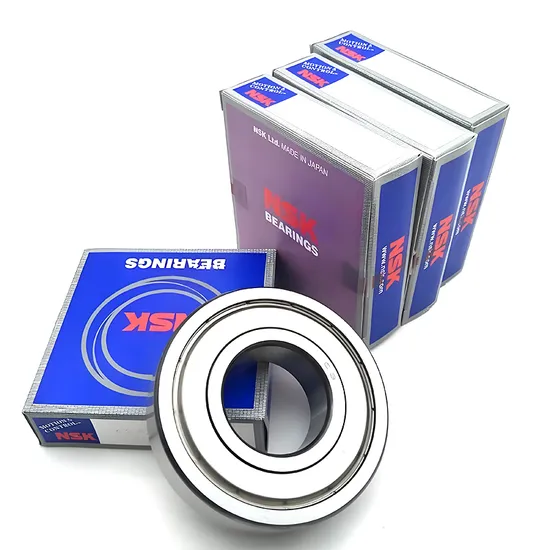
- Seal compound — weigh the working temperature band when choosing between standard nitrile and high-temperature fluoroelastomer for 2RS units.
- Protection level — map the IP rating the position needs, using ISO 15242 groupings for dust and water ingress.
- Speed factor — apply the derating that belongs to the closure, between 0.6 and 0.9, when you set maximum operating rpm.
- Grease compatibility — check that the lubricant will not attack the seal material, especially in high-temperature duty.
- Whole-life cost — compare total cost of ownership rather than sticker price, with maintenance and downtime in the model.
How Do You Pick the Right Closure for an Industrial Application?
Selection is a balance between what the environment demands and what the operation can live with. Deciding between ZZ, 2RS and open should follow a systematic look at where contamination comes from, how extreme the temperature gets, how fast the shaft turns, and what the maintenance regime allows. Skip that work and you buy either early failure or cost you did not need.
| Selection Factor | Common Mistake | Recommended Approach |
|---|---|---|
| Temperature | Assuming 2RS works for all high-temperature applications | Use ZZ for sustained temperatures above 120°C; specify FKM seals for 2RS when up to 200°C is required |
| Contamination Level | Over-specifying 2RS for clean environments | Use Open bearings in clean, well-lubricated systems; reserve 2RS for high-contamination areas |
| Rotational Speed | Ignoring speed limitations of contact seals | Calculate adjusted speed limits: ZZ (90% of open speed), 2RS (60-80% depending on temperature) |
| Maintenance Access | Selecting sealed bearings for inaccessible locations | Choose 2RS for minimal maintenance; ZZ for periodic inspection needs; Open for applications with regular maintenance schedules |
| Cost Consideration | Focusing solely on initial purchase price | Calculate TCO including installation, lubrication, replacement, and downtime costs over 24-month period |
A steel mill in Southeast Asia was losing continuous caster bearings repeatedly. Maintenance had standardized on open 6312 deep-groove units, replaced every three months because contamination from cooling water and iron oxide scale kept getting in, which produced an average of eight hours of unplanned downtime every month. With the duty profiled at about 85°C, high moisture and heavy particulate, the call was to move to 2RS sealed bearings. Life went straight to nine months, annual replacement cost fell 67%, and production interruptions stopped.
- Environment audit — map particulate, moisture and chemical exposure levels at the bearing position.
- Temperature profile — log ambient and operating readings at the housing during normal production, not only at start-up.
- Speed and duty cycle — establish peak rpm and how long it holds, then apply the closure's speed factor.
- Maintenance schedule — check planned intervals and how hard the position is to reach when relubrication is needed.
- Failure history — review past failures for whether contamination or lubrication dominated, since that points to the fix.
How Have Better Closure Choices Cut Industrial Downtime?
The field record shows what correct closure selection delivers. Three cases from different sectors show how matching the seal to the duty resolved long-running reliability trouble, and each one started from a closure chosen without reference to the environment.
| Application | Original Seal Type | Identified Issues | Upgraded Solution | Performance Improvement |
|---|---|---|---|---|
| Steel mill continuous caster | Open 6312 | Contamination, 3-month lifespan, monthly downtime | 2RS 6312 | 9-month lifespan, 83% reduction in failures, 40% lower maintenance costs |
| Wind Turbine Gearbox | ZZ 7215BECBP | Internal corrosion from condensation, IEC 61400-25 non-compliance | Modified 2RS with FKM seals | Zero corrosion incidents, 18-month certification cycle completion, 99.7% uptime |
| Copper Mine Crusher | Standard 2RS 22324CA | Dust ingress, frequent seizing, 75% failure rate | — | — |
Product Inquiry
Need an NSK-series equivalent for your application?
Send the designation or the duty details and our team replies within one business day with pricing, lead time and the certificates that travel with the shipment.
About the Author
Engineering desk
Bearing application engineers · compatible replacement bearings for brand-series interchange
Our editorial team covers global sourcing, supplier verification and industrial component knowledge. Material is assembled from published manufacturer specifications, industry standards and direct work with international B2B buyers, and every article is reviewed before publication.
Need a quote for a specific bearing designation? Our engineers reply within one business day.
Request a quote